
Ask someone to describe their home and they’ll often reach for a single label: mid-century, Scandinavian, industrial, farmhouse. As if a room were a breed, and the goal were to keep the bloodline clean. Deviate from the catalog and you’ve supposedly muddied something.
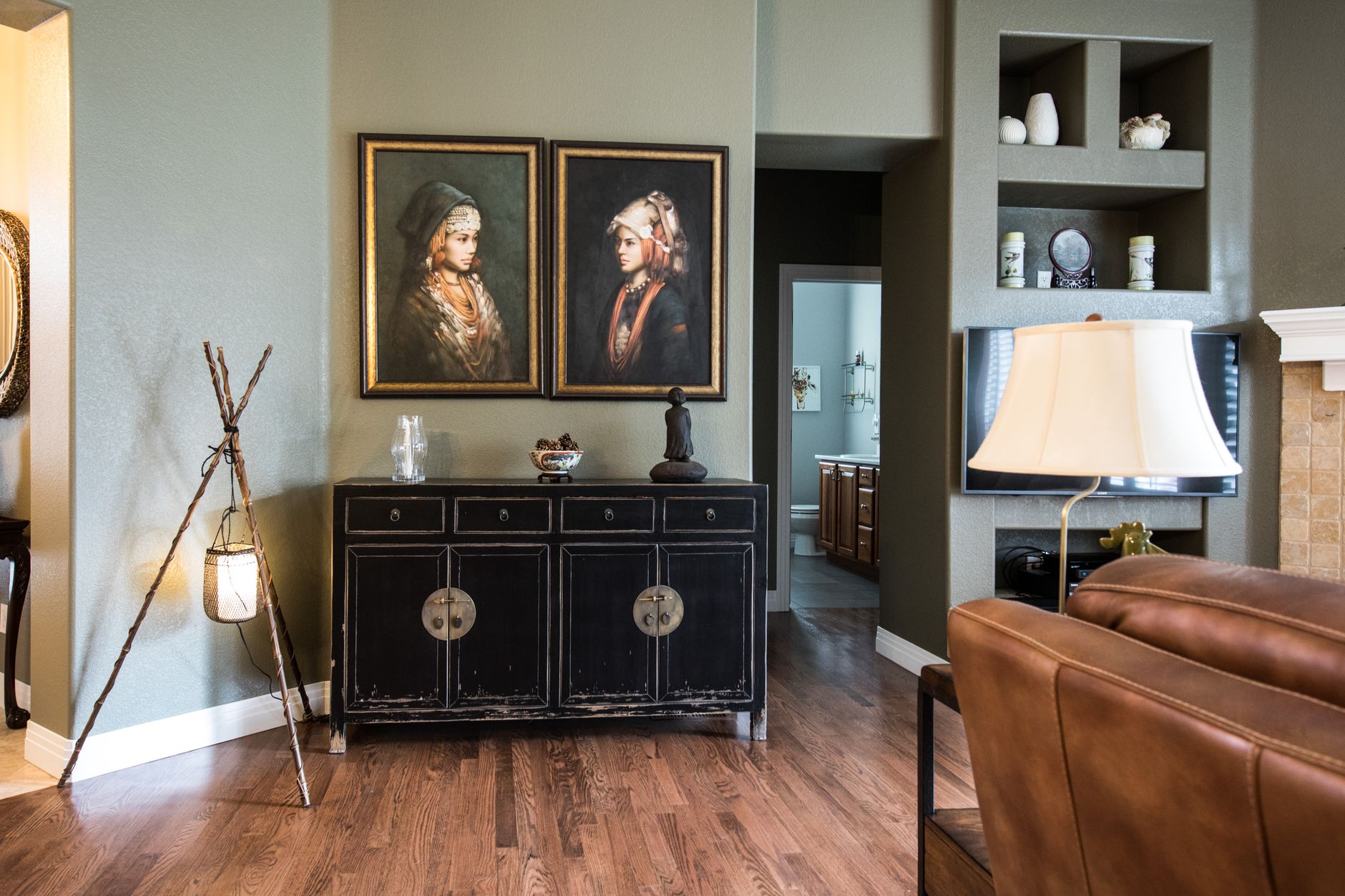
This is one of the most persistent misunderstandings in decorating, and it produces a lot of stiff, showroom-flat rooms. The truth is closer to the opposite. Almost every interior that people actually admire is a deliberate mix, and the ones that read as pure are usually the exceptions that prove how rarely purity works.
Where the single-style rule came from
The tidy named-style approach is largely a retail invention. Catalogs, showrooms, and shopping platforms need to group products so you can find them, and a label makes a collection legible. It’s easier to sell a coordinated set than to teach someone how to combine unlike things. Over time the sorting mechanism got mistaken for a design principle. A convenience for merchandising became, in a lot of people’s minds, a rule about taste.
What people actually get wrong about eclecticism
Eclectic has become a slightly nervous word, code for “I couldn’t commit, so I kept everything.” But genuine eclecticism is not the absence of decisions. It’s a surplus of them. A well-mixed room reflects a person who chose each piece on its own merits and then took responsibility for making those choices sit together. The failure most people call eclectic isn’t too much editing; it’s none.
The difference between mixed and messy
The line between the two is real and worth naming. Mixed rooms have friction that resolves; messy rooms have friction that doesn’t. A carved antique chair next to a plain steel table works because the contrast is legible and intentional, and because something else in the room ties them into a shared conversation. Messy is when three or four unrelated ideas compete and none of them win. The presence of many styles isn’t the problem. The absence of a governing hand is.
Anchors: the pieces that hold a hybrid room together
Every successful mix needs anchors, elements steady enough that the rest can wander. An anchor might be a repeated material, a controlled palette, a consistent wood tone, or one large piece that sets the room’s weight. Once you have two or three of these holding the center, you can bring in oddities without the space unraveling. The anchors do the reassuring, which frees everything else to be surprising. Skip them and even beautiful objects start to feel like they’re floating.
Why period-perfect rooms often feel lifeless
A room that faithfully reproduces one era and buys nothing outside it tends to read as a display rather than a home. Part of it is that real life is never that consistent; we accumulate things across years and moods, and a space with no evidence of that accumulation feels staged. A single anachronism, a modern lamp in a traditional room, a rough old bench in a slick one, is often what makes the whole thing believable. Perfection removes the friction that signals a room is actually lived in.
How restraint does more work than matching ever could
People reach for matching because it feels safe, but restraint is the more powerful tool. Limiting your palette, repeating a few materials, and leaving deliberate empty space will hold a wildly varied set of objects together far better than trying to make everything belong to the same family. Matching asks the pieces to be similar. Restraint lets them be different while quietly enforcing order around them. The second is harder and looks far more intentional.
Digital Furnishing and the pressure to name everything
The urge to label has intensified now that most of us plan rooms partly on screens, scrolling saved images filed under neat aesthetic tags. Some staging and visualization tools, such as Digital Furnishing, are genuinely useful for testing how unlike pieces read together before you commit, and that kind of previewing tends to loosen the naming reflex rather than tighten it. The trouble comes when the tag becomes the goal, when you shop to satisfy a category instead of to serve a room.
Building a room that borrows without apologizing
Start with what you already love and refuse to disqualify a piece for belonging to the wrong club. Set your anchors first, decide the palette and the two or three materials that will recur, then let everything else be chosen on instinct. Bring in one thing that doesn’t fit and see whether the room absorbs it or rejects it; adjust from there. A confident interior borrows freely and explains nothing. It doesn’t need a breed name, because it already has a point of view, and that is the thing the single-style rule could never actually deliver.