
A bathroom with a framed shower door and the same bathroom with a frameless panel are, on paper, nearly identical: same footprint, same tile, same fixtures. But stand in each one and they feel like different rooms. The difference isn’t square footage. It’s what the eye is allowed to do once a grid of aluminum stops chopping the space into sections.
Cramped Frame vs. Open Sightline
Framed enclosures announce their boundaries. Every edge is wrapped in a metal channel, and those channels draw hard lines across a small room, telling the eye exactly where the shower stops and the rest of the bathroom begins. In a compact space, that visual fence makes the whole room read as a set of little compartments.
Take the frame away and the sightline runs uninterrupted from the doorway straight to the far wall. Nothing halts the gaze halfway. The shower still occupies the same corner, but because the eye travels through the clear glass instead of stopping at a frame, the room stops feeling divided. In older homes with tight bathrooms, this single change does more for perceived size than any amount of rearranging.
Blocked Light vs. Borrowed Daylight
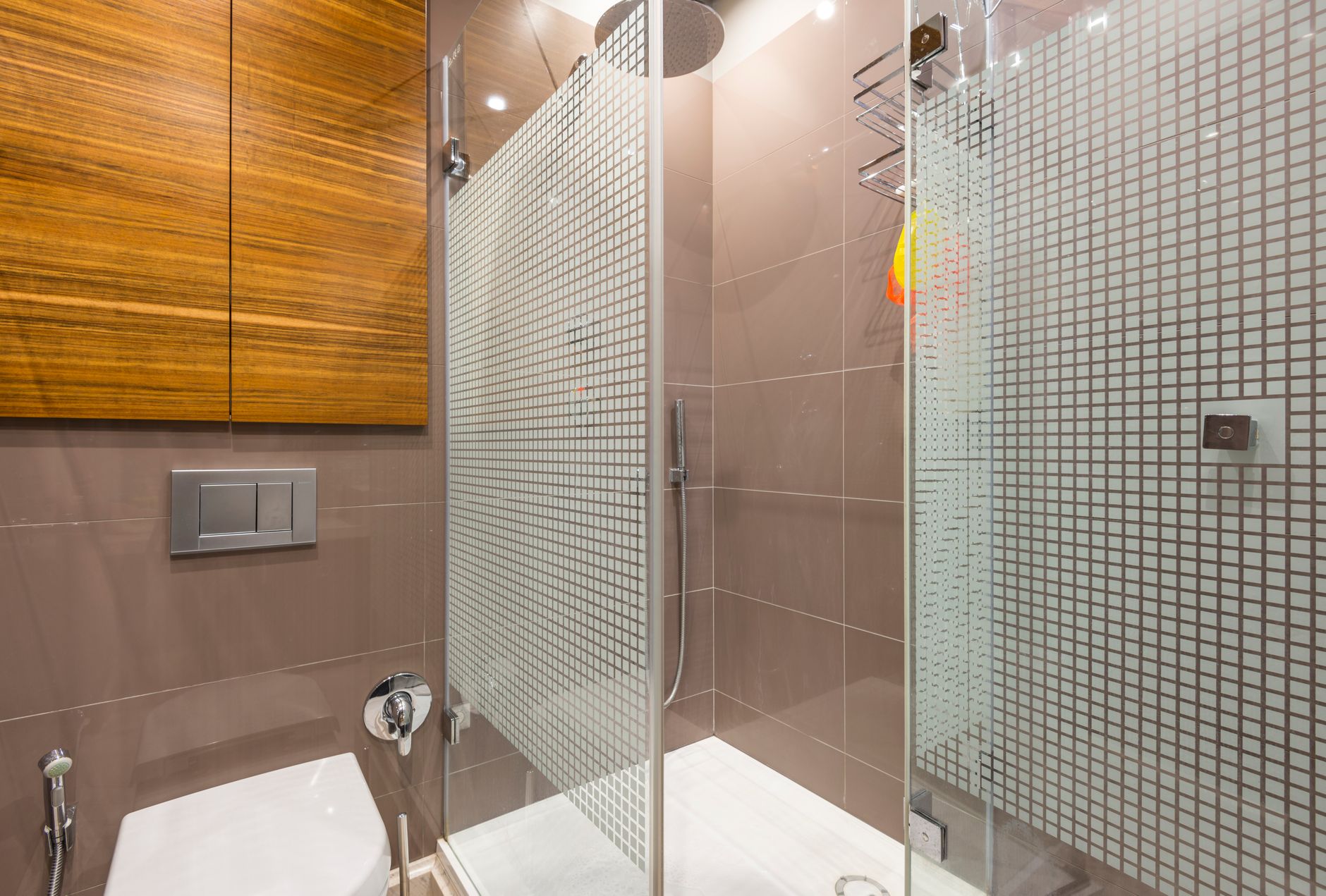
Framed and textured doors were often designed to obscure. Pebbled or rain-patterned glass, combined with thick metal rails, meant that whatever light entered a window near the shower got trapped in that one corner. The rest of the room stayed dim.
Clear frameless glass hands that light back. A window inside or beside the shower now brightens the vanity and the floor, not just the tile it sits against. The light is borrowed rather than blocked, and a bathroom that used to need the overhead fixture on at midday often doesn’t anymore.
Hidden Tile vs. Showcased Stonework
Here is the quiet frustration of framed and frosted enclosures: people pay for beautiful tile, then hide it. A row of handset mosaic or a slab of natural stone loses most of its impact behind cloudy glass and a metal border cutting across the pattern.
With frameless clear glass, the tile becomes the feature it was meant to be. The grout lines, the color variation in the stone, the accent strip at eye level, all of it stays visible from across the room. For anyone who invested in the surface, this is the change that finally makes that investment pay off.
Fussy Cleaning Routine vs. Wipe-and-Go Surfaces
Metal frames are where problems hide. The bottom channel collects standing water, the corners trap soap and mineral residue, and the little gaskets go grimy in ways a sponge can’t reach. Cleaning a framed door means fighting the frame more than the glass.
A frameless panel is mostly one continuous surface with minimal hardware. A squeegee after a shower and an occasional wipe keeps it clear. There’s simply less geometry for buildup to settle into, which matters even more given how quickly hard water leaves its mark in this part of Arizona. If you’re weighing that switch, it’s worth getting a custom frameless shower quote phoenix based on your actual opening rather than guessing from a big-box display model.
Rental-Grade Look vs. Custom-Fit Presence
A stock framed door reads as builder-grade or rental almost instantly, because it was sized to fit a range of openings rather than yours specifically. The gaps, the filler strips, the generic finish all say “whatever was on the shelf.”
Frameless glass is cut to the exact opening, and that precision registers even to people who couldn’t name why. The heavier glass, the clean edges, the hardware chosen to match the room, they combine into something that looks intentional. In Mesa homes being updated for resale, that shift from generic to fitted often reframes how the whole bathroom is perceived.
Weekend Guess vs. Measured Transformation
The temptation is to treat this as a Saturday project with a kit and a level. But frameless panels rely on tempered glass cut to tolerances that account for walls that aren’t perfectly plumb, which almost none are in an older bathroom. A guessed measurement is where DIY attempts crack, leak, or simply refuse to sit square.
A measured install turns the guess into a predictable result. Here is what actually changes when the frame comes down:
- The room reads larger without gaining an inch of floor.
- Existing daylight reaches farther and the tile finally shows.
- Cleaning drops to a quick wipe instead of a scrub.
- The finished look shifts from stock to custom-fit.